Understanding Your Property Taxes

Updated: Oct 14
Property taxes are one of the most misunderstood parts of municipal government. Every election, we hear promises to "keep taxes low" or claims that taxes are increasing because of one project or another. The reality is much more complicated. Since I've joined Council I've taken courses to better understand how Municipal Finances work and I've put together a little explainer to help spread that knowledge.
Who receives your property taxes?
Many people are surprised to learn that the Town does not keep all of your property taxes.
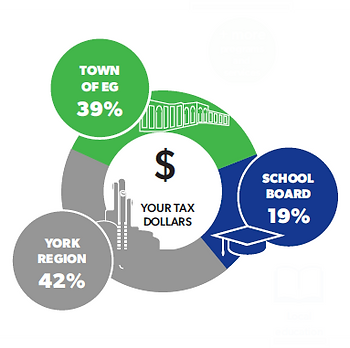
For the average two-storey home in East Gwillimbury, the total property tax bill is approximately $4,6431. Of that amount, only about $1,810 (39%2) stays with the Town. The remaining 61% is collected on behalf of York Region and the local school boards.
That means the Town delivers all of its local services for less than $5 per day.
What does that $5 per day provide?
It funds the municipal services we rely on every day, including:
Firefighters, fire trucks and emergency equipment
Garbage and green bin collection
Snow clearing and street sweeping
Local roads, bridges and sidewalk maintenance
Stormwater management
Parks, trails, playgrounds and splash pads
Operation of community centres, the new pool and libraries
Tennis courts, baseball diamonds, soccer fields and outdoor rinks
Library collections and digital resources
Animal control and by-law enforcement
Tree preservation and environmental initiatives
Accessibility and inclusion initiatives
Community events such as Canada Day, Remembrance Day, Music and Market Nights and the Santa Claus Parade
Customer service, planning, engineering, finance and many other services that keep the Town running.
In addition to property taxes, the Town also receives revenue from development charges, user fees, permits and licences. Those funding sources are important, but for this blog we're focusing only on the property tax portion.
How the Town builds its budget
Each year, the Town's budget generally falls into three categories.
1. Maintaining Existing Services
This covers the services residents already receive.
Just like your household budget, the cost of fuel, equipment, utilities, insurance and wages increases every year. If we want to maintain today's level of service, we have to account for those inflationary pressures.
Since I was elected, Council has also directed staff to find approximately 1% in additional efficiencies each year. That means every department is expected to continually look for savings throughout the year.
The goal is straightforward: maintain the services residents expect while keeping costs as low as possible.
2. Assessment Growth
As East Gwillimbury grows, the Town provides services to more residents. This is funded through Assessment Growth: more of the same services existing residents are already receiving, funded by the new people now using them.
New neighbourhoods require snow clearing, road maintenance, garbage collection, and parks maintenance. Growth also means additional staff may eventually be needed in areas such as roads, parks, by-law enforcement or customer service. This is all funded through the additional property taxes these new homes generate.
The goal is to provide the same level of service to everyone without increasing the tax rate, ensuring that existing residents don't experience declining service levels simply because the Town has more residents to serve.
3. Service Improvements
These are investments in services that residents didn't previously have.
Some are community priorities, such as operating the Health & Active Living Plaza (the building itself was paid for by Development Charges, but operating it is paid for by user fees and property taxes). Other costs are essential investments that improve public safety for everyone, such as transitioning from paid-on-call firefighters to a full-time fire service.
These are the choices Council must make every budget season: balancing affordability with the services residents need, want and expect.
Why % increases don't tell the whole story
When you hear that taxes increased by a certain percentage, it's important to understand what contributed to that increase.
It generally reflects a combination of:
inflationary pressures on existing services
strategic cost reductions that maintain existing services but keep costs down
service level increases for the things the community have been demanding
It’s important to keep taxes as low as possible, especially in these times, but looking only at the final percentage doesn't explain why those investments were made.
My record on Council
Since I was first elected in 2018:
Average annual inflation has been approximately 3.2%.
Base municipal tax levy has averaged approximately 2.7% per year over those 8 years.
That means we have generally kept the cost of maintaining existing services below the rate of inflation.
Additional tax increases have funded investments that permanently improved municipal services, including:
Operation of the Health & Active Living Plaza.
Increased funding for long-term infrastructure renewal through asset management program.
Expansion of Fire & Emergency Services, including 11 additional firefighters, new emergency vehicles and planning for a fourth fire station.
Maintaining new parks, trails, recreation facilities and other community amenities throughout our town, not just in new neighbourhoods.
These investments typically average an additional 1% to 1.5% annually to the tax levy above inflation. They were not simply paying more for the same services; they were providing services that did not exist in 2018.
When combined, Council has generally kept the average annual tax increase to within 1 percentage point of inflation (average over my 8 years on Council) while significantly expanding municipal services. For the average homeowner, that additional investment each year amounts to roughly $1 to $2 per month beyond inflation.
Without those investments, we would not have been able to operate the Health & Active Living Plaza, strengthen our fire service or responsibly fund infrastructure replacement.
Looking beyond campaign slogans
During every election, candidates promise lower taxes while also promising new services and facilities. Those promises deserve an important follow-up question:
What specifically would you cut, or how would you pay for it?
Municipal budgeting is about making difficult choices. Every new service has an operating cost.
Every dollar spent in one area cannot be spent somewhere else.
Throughout my time on Council, I have consistently looked for ways to reduce the tax burden by identifying areas of potential savings and questioning unnecessary spending, while supporting investments that improve safety, protect our infrastructure and respond to the priorities residents have identified.
Final Thoughts
Keeping taxes low is important, especially when families are facing rising costs.
Keeping taxes low should never come at the expense of public safety, maintaining our infrastructure or protecting the quality of life that makes East Gwillimbury such a great place to live.
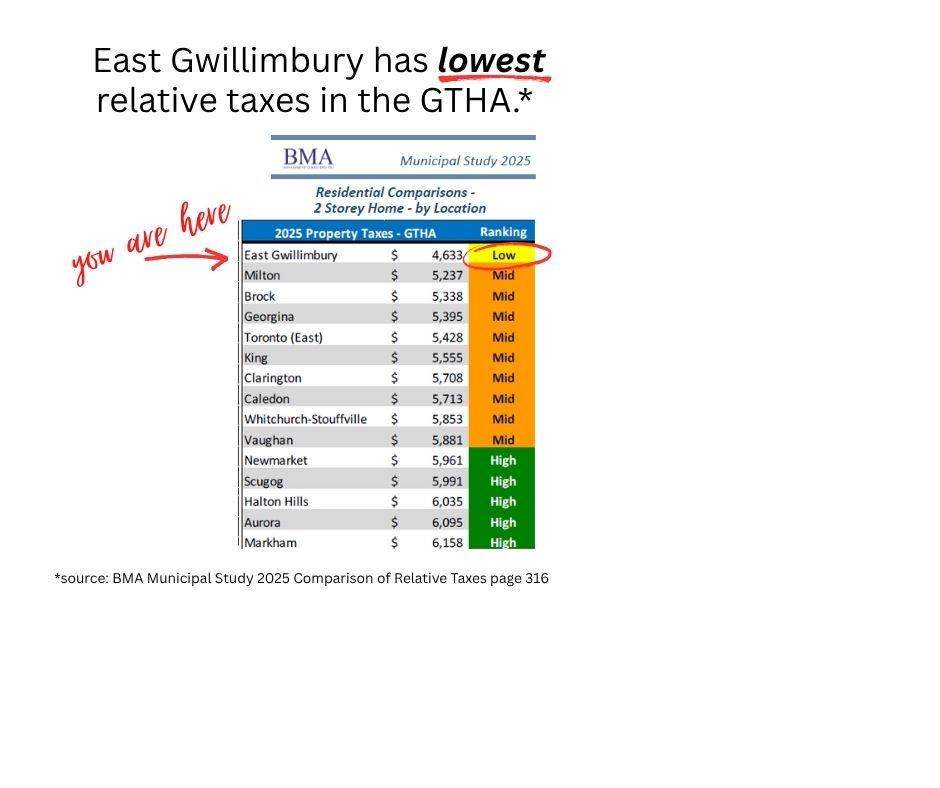
I'm proud that throughout my time on Council we've maintained the lowest relative property taxes in York Region while continuing to invest responsibly in the services and infrastructure our growing community needs. (See my previous blog post on Lowest Relative Taxes, if you are still wondering what that means.)
Understanding how municipal budgets work helps us move beyond simple slogans and have informed conversations about the future of our community.
Footnotes: